
Showing posts with label drama. Show all posts
Showing posts with label drama. Show all posts
Wednesday, March 2, 2016
The Academy Awards: Better than Last Year...But Good?

Wednesday, February 24, 2016
Black Mass Could Have Been Way Bettah

 Eh. That sums it
up. The highly anticipated crime drama Black Mass directed by Scott Cooper was
good but ultimately, could have been significantly better. Living in the Boston area, everyone and their
mothah was wicked excited about the movie about South Bawston’s own Whitey
Bulgah. Many in this area have vivid
memories of the notorious crime boss and his penchant for violence. After the media storm surrounding his capture
and trial in 2011, it made sense for Hollywood to cash in and the result is a film
that follows all the standard “mafia movie” tropes. As a result, the movie comes across as an
amalgam of themes, scenes, and dialog that feels straight out of BETTER
organized crime dramas of the past. That
being said, the film is essentially a story about the character of Whitey
Bulger – a man whose brutality has become myth.
In this respect, it was well done.
Johnny Depp’s portrayal of Bulger while over the top at times felt
authentic and conveyed the deep seated madness behind the family man from
Southie. Regardless, you’re always aware
that it’s Johnny Depp (the problem with such recognizable actors) and you’re
even more aware that Depp’s accent is false.
Given, he does a pretty phenomenal job as fake Boston accents go but it’s
still a hurdle to get over that distracts you from the dialog (which admittedly
has its ups and downs). Supporting
actors Benedict Cumberbatch as Billy Bulger and Joel Edgerton as dirty cop
John Connolly are shadowed by Depp and feel almost unnecessary. It would have been nice to focus solely on
Bulger himself and not get bogged down with the story of Connolly’s role in
getting Bulger set up as an informant for the FBI. Overall, the film was OK but disappointing in
that it could have been great.
Eh. That sums it
up. The highly anticipated crime drama Black Mass directed by Scott Cooper was
good but ultimately, could have been significantly better. Living in the Boston area, everyone and their
mothah was wicked excited about the movie about South Bawston’s own Whitey
Bulgah. Many in this area have vivid
memories of the notorious crime boss and his penchant for violence. After the media storm surrounding his capture
and trial in 2011, it made sense for Hollywood to cash in and the result is a film
that follows all the standard “mafia movie” tropes. As a result, the movie comes across as an
amalgam of themes, scenes, and dialog that feels straight out of BETTER
organized crime dramas of the past. That
being said, the film is essentially a story about the character of Whitey
Bulger – a man whose brutality has become myth.
In this respect, it was well done.
Johnny Depp’s portrayal of Bulger while over the top at times felt
authentic and conveyed the deep seated madness behind the family man from
Southie. Regardless, you’re always aware
that it’s Johnny Depp (the problem with such recognizable actors) and you’re
even more aware that Depp’s accent is false.
Given, he does a pretty phenomenal job as fake Boston accents go but it’s
still a hurdle to get over that distracts you from the dialog (which admittedly
has its ups and downs). Supporting
actors Benedict Cumberbatch as Billy Bulger and Joel Edgerton as dirty cop
John Connolly are shadowed by Depp and feel almost unnecessary. It would have been nice to focus solely on
Bulger himself and not get bogged down with the story of Connolly’s role in
getting Bulger set up as an informant for the FBI. Overall, the film was OK but disappointing in
that it could have been great.Wednesday, February 10, 2016
Hot New Movies!
 The Duxbury Free Library carries the newest,
most popular films - typically right as they come out!
If you're a movie lover it's crucial you keep an eye on
our "NEW" section as it is updated regularly. Get on
the hold list early for some of Hollywood's biggest flicks
by signing up for DVD bookletters! We'll email you
when all the great new titles arrive in the catalog.
For now, check out some of these great new titles!

This dark, Colonial period drama from the BBC stars Aidan Turner (The Hobbit) as Ross Poldark. The shows 8 episodes chronicle his return to his small Cornish town after years away fighting in the American War for Independence. If you're disappointed that there aren't more episodes, fret not! Season two is on its way.

Ted 2
Seth MacFarlane's sequel to his hysterical live action debut starring a crude stuffed bear magically brought to life by the love of his owner sees much of the same humor and jokes. That being said, it's certainly got it's laugh out loud moments. Mark Wahlberg is so unbelievable in comedic roles his time on screen is almost funny in and of itself. If you're a Family Guy fan than odds are you enjoyed the first Ted and odds are you will enjoy the second.

Diary of a Teenage Girl
This fabulous coming of age drama is one part funny, two parts creepy, and three parts brilliantly emotional. Based on the graphic novel memoir of the same name by Phoebe Gloeckner, the film stars Alexander Skarsgard (True Blood), Kristen Wiig (Bridesmaids), and introduces Bel Powley as protagonist Minnie Goetze. Minnie's middle teen years and her sexual awakening at the hands of her mothers boyfriend (Skarsgard) paint an interesting portrait of mid-70's San Francisco in the wake of the hippie movement.
The 88th Annual Academy Awards Approaches!
 It's February and that means one thing (besides Valentines Day)...the Academy Awards are approaching!! I have high hopes for this year and maintain the belief that the Oscars is the LAST truly sensible award show. After the farce that was this years Golden Globes (see my post on The Martian) I'm really hoping the Academy can pull it together to make some wise, multicultural, intelligent picks this year. Though it seems popular opinion has continuously found it's way into the mix with movies like Mad Max Fury Road getting a nom for Best Picture....give me a break!! That being said there are some truly amazing films and actors up for awards this year. Best Picture noms include Spielberg's Bridge of Spies and the Boston based Catholic Church drama Spotlight. Leo is up for Best Actor again for his emotional role in The Revenant who's mastermind Alejandro Inarritu is also up for Best Director. Jennifer Lawrence is quickly establishing herself as a core part of the next generation of iconic Hollywood actresses and is nominated for her role in Joy. As far as animation goes, there is only one film in the category in my opinion; Pixar's fabulous Inside Out. Other things to watch for include whether John Williams will take home his sixth Oscar for Best Original Score for his work on Star Wars: The Force Awakens and whether or not The Martian will win Best Adapted Screenplay (it should!). In the weeks leading up to the film industries biggest night, stop by the DFL and pick up a Best Picture winner from years past!
Wednesday, January 20, 2016
The Martian Was Sci-Fi Perfection

Matt Damon plays protagonist Mark Watney, a botanist and mechanical engineer working on Mars as part of the Ares III mission to the red planet. After a suprisingly violent sandstorm forces the crew to make an immediate departure from the planet's surface, Mark is struck by debris and believed dead. The crew retreats to the Hermes orbital station and begins their return voyage to Earth. Mark wakes up after the storm subsides and makes his way back to the HAB where the astronauts had been living on the surface. Faced with immeasurable odds, Mark must overcome each obstacle one at a time if he ever hopes to survive long enough to make it home alive.
Damon's portrayal of Watney is superb. It's always dangerous when you put such a recognizable and iconic actor in such a role because it can be hard to immerse yourself in the film. It's so important to be able to sympathize with the plight of the survivor in films such as this and the added variable of survival in space makes it all the more harrowing. As such, prominant actors can often be more of a distraction than an enhancement and make it harder for the viewer to put themselves in the protaganists shoes. This is not the case in The Martian. Damon is superb. Supporting actors were also on their game, most notably Jeff Daniels as the Director of NASA and Jessica Chastain as Ares III mission commander Melissa Lewis.
While the film certainly utilizes a heavy amount of comedic relief, mostly from Watney as he talks to his video log, it is meant to help keep Mark and the viewer sane as the notion of years alone on the red planet begins to sink in. It's important to make light of any dire situation to avoid panic and ultimately failure. The fact that this sarcastic, comedic relief was misconstrued as outright comedy by the motion picture elite is downright embarrassing. I'll leave it at that.
The films visuals are brilliant and showcase the beauty of the Martian surface. Large rock formations, sweeping dunes, and a glowing orange sky serve as the backdrop to Mark's survival activities. They are a constant reminder of the perils and beauty of space. While the film certainly had its pitfalls, overall I can't speak highly enough about the acting, script, and visuals. When combined, they do exactly what science fiction is supposed to do: inspire, intrigue, and continually tempt humanity to open the Pandora's Box that is deep space travel.
Wednesday, December 9, 2015
Testament of Youth Was Brilliant
 I’m a self-proclaimed HUGE fan of period dramas. Being a total history nerd, I love immersing
myself in a well filmed, well-acted, well written historical drama and 2014’s Testament of Youth was just that. Based on Vera Brittain’s memoir of the First
World War; the film stars Alicia Vikander (Anna Karenina, Ex-Machina) as Vera
and Kit Harrington (Game of Thrones) as her fiancée Roland. Focusing less on the battles and violence and
more on the emotional weight of the conflict, the film manages to instill the
fear of the unknown in the viewer as the men and women at home in England wait
with bated breath for news of their loved ones.
Vera’s fiancée, brother, and childhood friends are all sent off to the
front which inspires her to abandon her long sought enrollment at Oxford to
become a nurse with the Voluntary Aid Detachment at the Front. As she spends time waiting for news of her
loved ones Vera helps to heal both allied and German soldiers. This humanizes the conflict and shows how the
Great War was not just a war between countries but a war humanity faced against
itself. Testament of Youth shows how close we came to the brink of
destruction and how despite all the tragedy and suffering endured by those who
were there, we still managed to emerge on the other side with hope for the
future.
I’m a self-proclaimed HUGE fan of period dramas. Being a total history nerd, I love immersing
myself in a well filmed, well-acted, well written historical drama and 2014’s Testament of Youth was just that. Based on Vera Brittain’s memoir of the First
World War; the film stars Alicia Vikander (Anna Karenina, Ex-Machina) as Vera
and Kit Harrington (Game of Thrones) as her fiancée Roland. Focusing less on the battles and violence and
more on the emotional weight of the conflict, the film manages to instill the
fear of the unknown in the viewer as the men and women at home in England wait
with bated breath for news of their loved ones.
Vera’s fiancée, brother, and childhood friends are all sent off to the
front which inspires her to abandon her long sought enrollment at Oxford to
become a nurse with the Voluntary Aid Detachment at the Front. As she spends time waiting for news of her
loved ones Vera helps to heal both allied and German soldiers. This humanizes the conflict and shows how the
Great War was not just a war between countries but a war humanity faced against
itself. Testament of Youth shows how close we came to the brink of
destruction and how despite all the tragedy and suffering endured by those who
were there, we still managed to emerge on the other side with hope for the
future.Wednesday, December 2, 2015
Mr. Holmes Was a Triumph


Sherlock Holmes is such an iconic character that the role is a difficult challenge to take on. Add variables like retirement, extreme old age, and the onset of dementia, and the detective’s dry wit and immeasurable powers of observation become even harder to get across. However, Sir Ian McKellen manages to embody the character; simultaneously capturing his youthful abilities while keeping things in perspective. Mr. Holmes provides a glimpse into the future of a character that the world has come to recognize as the definitive sleuth.
It’s 1947 and
Sherlock Holmes, now in his mind 90’s, is living a quiet life having retired
from Baker Street after a final devastating case. His old partner Watson, who has since passed
away, wrote of his adventures with Sherlock and despite his personal experience
embellished the tales to a great extent.
As a result, Holmes begins to try desperately to fend off his increasing
memory loss long enough to recall the true story of his last case so he can
remember why it was he left his beloved profession behind. Flashbacks to 1912 provide glimpses into the
reality of that case in which Holmes was hired by a husband to find out why his
wife had changed so much since her second miscarriage. These brief snapshots put the viewer in the
old man’s shoes as he frustratingly attempts to piece together the story. In the present, Holmes befriends his housekeeper’s
son Roger and the two form an unlikely bond as Roger’s curiosity intrigues
Sherlock. Roger’s inquisitive nature helps
him start to remember the forgotten case as things slowly become clearer.
The film was
brilliantly emotional and just complex enough to provide an air of mystery. This is a Sherlock Holmes story isn’t it! Holmes’ relationship with Roger provides a
lovely end to the detectives life and presents a perspective he’d often not
considered: that love and the personal relationship we form are the most
important element of a well lived life and are quite literally ALL that matter
as we near the end. As a result,
Sherlock is humbled in his twilight hours and is able to reflect on not only
his mysterious final case, but his life in its entirety. After struggling for years with regret and
guilt, the man is finally able to come to terms with his life and embrace however
much of it is left with excitement and hope.
Wednesday, June 3, 2015
Theory of Everything Was Perfect
 It almost doesn’t feel right to try and condense a
film as powerful as The Theory of
Everything into a blog post. The film,
which is far and away one of the most emotionally resonant and deeply moving
films I’ve ever seen, was an absolutely stunning portrayal of one of the
greatest minds to ever walk this earth.
Directed by James Marsh, the biopic does more than show the genius of
Stephen Hawking. It shows the deep
rooted power of love and its ability to help human beings defy insurmountable
odds.
It almost doesn’t feel right to try and condense a
film as powerful as The Theory of
Everything into a blog post. The film,
which is far and away one of the most emotionally resonant and deeply moving
films I’ve ever seen, was an absolutely stunning portrayal of one of the
greatest minds to ever walk this earth.
Directed by James Marsh, the biopic does more than show the genius of
Stephen Hawking. It shows the deep
rooted power of love and its ability to help human beings defy insurmountable
odds.
When most people hear the name Stephen Hawking, they
immediately think of the genius in a wheelchair with some disease who speaks
through a computer; that generic, emotionless, monotone which has become synonymous
with the famed physicist. But Eddie
Redmayne’s portrayal of the man behind the voice and the chair transcended
acting in a way rarely seen. He WAS
Stephen Hawking. His anger and
frustration is perceptible as he slowly slips into complete paralysis. And yet, Redmayne is able to show the man
within the body, never losing his sense of humor and conveying loss, hatred and
jealousy through his unresponsive visage.

Beginning in the early 1960’s, a young Stephen Hawking
is in the prime of his life and pursuing a PhD in Physics at the University of
Cambridge. While there two life changing
milestones confront Hawking nearly back to back. The first is meeting the love of his life, literature
student Jane Wilde (Felicity Jones); the second is his soul crushing diagnosis
with ALS. Hawking learns he has an
estimated two years to live while his muscles slowly deteriorate into useless
masses. Jane, whom he tries to persuade
to leave, opts to stick it out and make Stephen’s remaining time on this planet as happy and comfortable as possible.
Despite everything, Hawking completes his PhD, marries Jane and even has
children as he continuously defies the odds which were so abruptly stacked
against him.
The film is as much the story of Jane Hawking as it is
her husbands. The struggles she endures
and her unwavering support year after year is both uplifting and heartbreaking
at the same time. Their relationship is
one rooted in hope and built entirely on their love for one another. Over the course of Hawking’s life Jane
remains one of the few people who sees Stephen for who he was before the
disease decimated his body leaving only his mind intact. She continues to be the constant reminder
that there is a normal man trapped inside his shell, which only serves to make the films climax all
the more powerful.
This is a film that EVERYONE needs to see. It shows us the almost unimaginable power of
hope and love against a backdrop of suffering and emotional hardship. It reaffirms how lucky each and everyone one
of us are and teaches us to not take our lives for granted. In this way, we are humbled to watch a man
accomplish so much in the face of such odds.
It allows for a level of self-reflection often not present in film. Much like Hawking’s brilliant theories on
time and the universe, the film is perfection.
Wednesday, May 27, 2015
Unbroken is Powerfully Motivational and Inspiring


Directed by Angelina Jolie, the film tells the story of Olympic runner Louis “Louie” Zamperini who spends 47 days adrift in the pacific aboard a small life raft after his bomber breaks down midflight and the crew is forced to ditch the plane. Louie is eventually picked up by the Japanese and spends the remainder of the war in various POW camps. Many critics felt the film didn’t live up to its full potential. Most believed Jolie bit off more than she could chew and the opportunity for one of the greatest war films of a generation was lost. Now again, I can’t speak to how accurately the movie represented the book but
 I can say that I thought it was a stunning
war film. Starting off with Zamperini in
the midst of a dangerous bombing mission, flashbacks show us a troubled boy who
rose from a seemingly meaningless life to one of glory and greatness eventually running in
the 1936 Olympics in Germany. The film
does a terrific job of showing how far someone can push themselves if they are
determined to survive and succeed. The
hardship suffered by Louie over the course of his time at sea and eventual
internment is beyond motivational. The
pain, hopelessness, and degradation he faces at the hands of his Japanese
captors is unbearable to even conceive of.
And yet throughout it all he remains positive and committed to making it
home one day. His staunch determination
is matched only by his love of others and his willingness to take the pain if
it means keeping his co captives out of harm’s way. A rivalry develops between Louie and a young
Japanese officer in charge of the camp nicknamed “The Bird” who reminds him of
the Japanese Olympians he encountered years before. Now under very different circumstances, The
Bird does everything in his power to break Zamperini’s spirit. Despite coming so close to death on multiple
occasions Louie is able to persevere.
I can say that I thought it was a stunning
war film. Starting off with Zamperini in
the midst of a dangerous bombing mission, flashbacks show us a troubled boy who
rose from a seemingly meaningless life to one of glory and greatness eventually running in
the 1936 Olympics in Germany. The film
does a terrific job of showing how far someone can push themselves if they are
determined to survive and succeed. The
hardship suffered by Louie over the course of his time at sea and eventual
internment is beyond motivational. The
pain, hopelessness, and degradation he faces at the hands of his Japanese
captors is unbearable to even conceive of.
And yet throughout it all he remains positive and committed to making it
home one day. His staunch determination
is matched only by his love of others and his willingness to take the pain if
it means keeping his co captives out of harm’s way. A rivalry develops between Louie and a young
Japanese officer in charge of the camp nicknamed “The Bird” who reminds him of
the Japanese Olympians he encountered years before. Now under very different circumstances, The
Bird does everything in his power to break Zamperini’s spirit. Despite coming so close to death on multiple
occasions Louie is able to persevere.Near the start of the film, just after Louie gets on the train bound for the Olympics his older brother reminds him that a moment of pain is worth a lifetime of greatness. This ends up being central to the film, always popping back up in your mind as you witness the horrors encountered by both Louie and the other prisoners. In this way Louie’s running ends up being analogous to his experiences in that if you push yourself beyond what you thought capable, you can make it through anything. Overall, I found the film to be not only uplifting but inspirational in a way I haven’t encountered in some time. The critics can say what they will, but I think Unbroken will be considered one of the better war dramas of the 2010’s, no question.
Wednesday, May 13, 2015
Whiplash Was a Violently Emotional Film
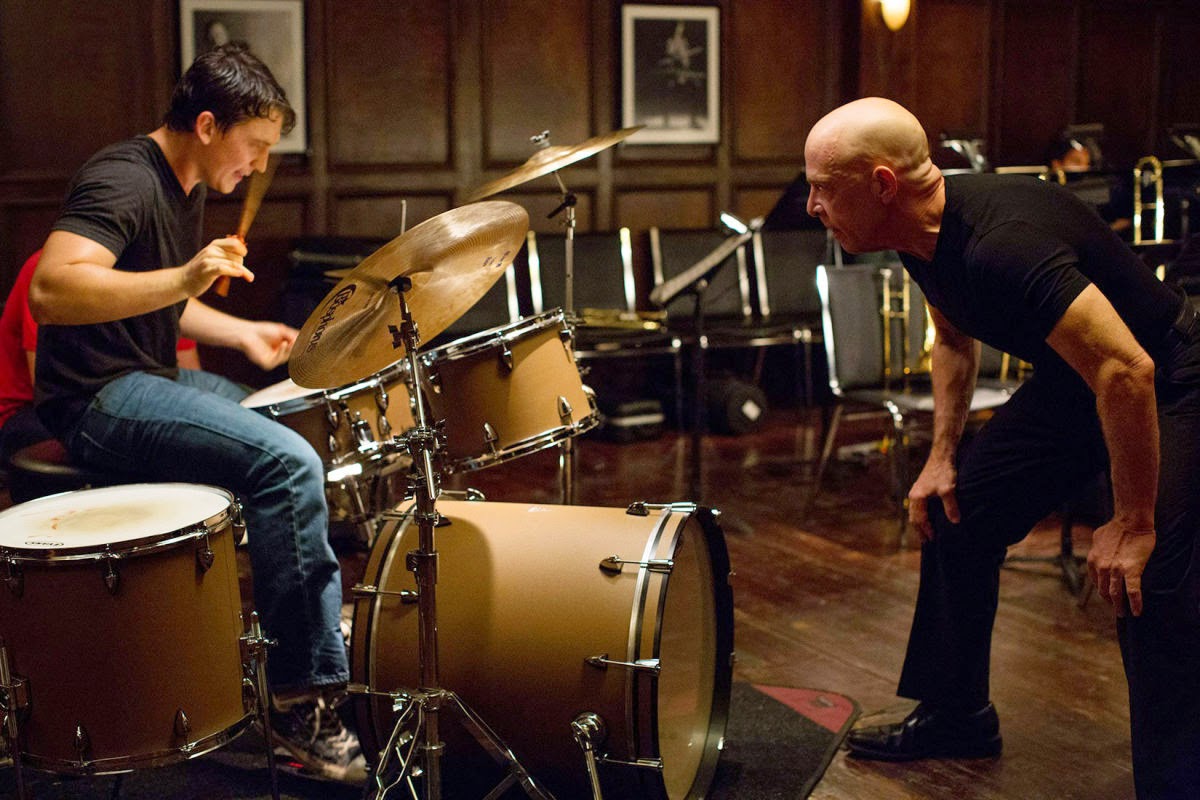 Everyone I spoke
to about the musical drama Whiplash
had nothing but good things to say about the film. That is was brilliantly acted, deeply
emotional, and all around captivating in its intensity were just a few of the
glowing remarks I’d heard about this seemingly random film which gained
momentum after its premier at Sundance and eventually won several academy
awards including a nom for Best Picture.
Everyone I spoke
to about the musical drama Whiplash
had nothing but good things to say about the film. That is was brilliantly acted, deeply
emotional, and all around captivating in its intensity were just a few of the
glowing remarks I’d heard about this seemingly random film which gained
momentum after its premier at Sundance and eventually won several academy
awards including a nom for Best Picture.
 Based on the high school
experiences of director Damien Chazelle, the films protagonist Andrew Neiman
played by Miles Teller aspires to be one of the best jazz drummers of all
time. Idolizing the greats like Buddy
Rich, Miles’ entire life revolves around his drum kit. After Terrence Fletcher, an infamous teacher
and conductor overhears Andrew practicing, he invites him to join his
prestigious jazz band made up of the best musicians at the school. Starting as alternate drummer, Andrew moves
up and down the proverbial ladder jumping from core to alternate several times
as he struggles to live up to the ridiculously high expectations of Fletcher
who is constantly verbally and physically abusive. J.K. Simmons deserved the Oscar win for Best
Supporting Actor without a doubt. His
anger and rage is palpable and the response it evokes in the viewer is at times
unsettling. The way he treats his
students is unacceptable, but it’s done in the interest of pushing the few who
have the potential to become legends to the limits. While you sympathize with Andrew has he
struggles to be the best and to impress Fletcher, you can’t help but feel that
the two were meant to work with each other.
Andrew wants history to remember him alongside his idols like Rich, and
Fletcher is the kind of person who will help him achieve that. After they have a falling out, Fletcher and
Andrew meet at a jazz club where Fletcher explains his methodology by stating
that the worst thing anyone can ever say to someone is “good job” implying that
it only convinces the person to not push themselves further and the only way to
become great is to never stop pushing yourself to be better.
Based on the high school
experiences of director Damien Chazelle, the films protagonist Andrew Neiman
played by Miles Teller aspires to be one of the best jazz drummers of all
time. Idolizing the greats like Buddy
Rich, Miles’ entire life revolves around his drum kit. After Terrence Fletcher, an infamous teacher
and conductor overhears Andrew practicing, he invites him to join his
prestigious jazz band made up of the best musicians at the school. Starting as alternate drummer, Andrew moves
up and down the proverbial ladder jumping from core to alternate several times
as he struggles to live up to the ridiculously high expectations of Fletcher
who is constantly verbally and physically abusive. J.K. Simmons deserved the Oscar win for Best
Supporting Actor without a doubt. His
anger and rage is palpable and the response it evokes in the viewer is at times
unsettling. The way he treats his
students is unacceptable, but it’s done in the interest of pushing the few who
have the potential to become legends to the limits. While you sympathize with Andrew has he
struggles to be the best and to impress Fletcher, you can’t help but feel that
the two were meant to work with each other.
Andrew wants history to remember him alongside his idols like Rich, and
Fletcher is the kind of person who will help him achieve that. After they have a falling out, Fletcher and
Andrew meet at a jazz club where Fletcher explains his methodology by stating
that the worst thing anyone can ever say to someone is “good job” implying that
it only convinces the person to not push themselves further and the only way to
become great is to never stop pushing yourself to be better.
While I agree the
acting was top of the line and the drumming is other worldly, I wanted a little
more from the film. Andrew’s love
interest is barely even relevant and felt like a wasted storyline. The same goes for his father. We find out almost nothing about Andrew’s
past and his absent mother and while his father fills the roll of emotional
support system, their relationship with each other is barely touched on leaving
you feeling like the possibility for added emotional weight was missed. The film clearly intended to focus solely on
the relationship between Andrew and his teacher so the other “half storylines”
feel unnecessary. In the end if you like
jazz music, Whiplash was a good
movie. If you like drumming, it was a
superb movie.
Wednesday, May 6, 2015
Montage of Heck Lives Up to the Hype
 The day finally
arrived. Monday May 4th, the
much anticipated and widely acclaimed Kurt Cobain documentary Montage of Heck premiered on HBO. Named for a violently sporadic and twisted
mixtape recorded by Cobain in 1988, the film garnered intensely positive reviews
and as such, I was looking for a game changer.
A documentary which not only captured the man’s genius but also depicted
the human element so often left out of Cobain and Nirvana documentaries in the
past. The film did not disappoint.
The day finally
arrived. Monday May 4th, the
much anticipated and widely acclaimed Kurt Cobain documentary Montage of Heck premiered on HBO. Named for a violently sporadic and twisted
mixtape recorded by Cobain in 1988, the film garnered intensely positive reviews
and as such, I was looking for a game changer.
A documentary which not only captured the man’s genius but also depicted
the human element so often left out of Cobain and Nirvana documentaries in the
past. The film did not disappoint.
Consisting of
hidden archival materials brought to the table for the first time by Cobain’s
wife Courtney Love and daughter Francis Bean who was an executive producer, the
film showed a side of Kurt which is often forgotten. One that the history books gloss over with
demented tales of drug abuse and emotional instability. Segments of Cobain’s diaries juxtaposed over
early demos of songs and haunting audio recorded by Cobain himself piece
together a collage which showcases a man determined to be taken seriously,
committed to feeling accepted, and above all else resolute in his need avoid humiliation.
 Starting with home
movies of the Cobain family in the early years, we see Kurt as a young and
happy child sharing Christmas with family and always smiling. Interviews with Cobain’s mother and father
indicate a loving household, albeit one with a darker underside. Kurt’s father Don wasn’t supportive of Kurt’s
creativity and the verbal abuse he received from the man was something that
stayed with him throughout his formative years.
After his parents’ divorce, Cobain spent much of his early adolescence
moving around between homes of relatives and friends. It wasn’t until Kurt found the Underground
that he felt truly accepted and from there on out, he was in the fast
lane.
Starting with home
movies of the Cobain family in the early years, we see Kurt as a young and
happy child sharing Christmas with family and always smiling. Interviews with Cobain’s mother and father
indicate a loving household, albeit one with a darker underside. Kurt’s father Don wasn’t supportive of Kurt’s
creativity and the verbal abuse he received from the man was something that
stayed with him throughout his formative years.
After his parents’ divorce, Cobain spent much of his early adolescence
moving around between homes of relatives and friends. It wasn’t until Kurt found the Underground
that he felt truly accepted and from there on out, he was in the fast
lane.
The early Nirvana
footage is top notch and high quality showcasing favorites like “Dive”, “School”,
and “Floyd the Barber” performed in houses or small basement venues to crowds
of people varying in size from two middle aged workers from down the street to
15 disillusioned punks. The footage when
interspersed with portions of Cobain’s notes and journals help provide detailed
background into the enigmatic front man’s thought process and offer unique
insight into the development of Nirvana.
From a montage of handwritten band names to scribbled lyrics, the viewer
see’s the other side of the famed rock band.
It was something that grew organically over time, not a sudden outburst. Kurt didn’t have a grand idea beyond playing
music he found to be meaningful and trying to get famous. Although as the world now knows, fame had a
much darker side which only made itself clear to Kurt once it was too late,
fueling his drug abuse and emotional insecurity.
 The latter half of
the film, besides dealing with the obvious fame of Nirvana through interview
snippets and stadium concert footage shows Cobain in the privacy of his
home. Between arguments with Courtney
half naked in the bathroom, discussions in bed, and playing with young Francis;
each show a man who cared deeply for his family. A man that was proud of his accomplishments
and guilt stricken over his failures.
The latter half of
the film, besides dealing with the obvious fame of Nirvana through interview
snippets and stadium concert footage shows Cobain in the privacy of his
home. Between arguments with Courtney
half naked in the bathroom, discussions in bed, and playing with young Francis;
each show a man who cared deeply for his family. A man that was proud of his accomplishments
and guilt stricken over his failures. Wednesday, April 15, 2015
Frank is a Quirky and Revealing Film About Music

 Austin’s South by Southwest Music and Art Festival has long
been a place where local, regional, and relatively unknown bands are given the
chance to reach a wider audience. Many
see playing the event as a turning point in their careers. With this year’s incarnation having recently
come to a close, I figured it was an appropriate time to discuss a recent indie
film I watched which deals with exactly this, among other things. Frank
directed by Lenny Abrahamson and starring Domhnall Gleeson, Maggie Gyllenhaal,
and Michael Fassbender is the story of a charismatic yet strange band called The
Soronprfbs (the name is intentionally confusing). After their keyboardist has a mental
breakdown, the bands manager Don bumps into a young man named Jon who is in
aspiring songwriter and performer. Jon
is invited to play with The Soronprfbs that night in town and jumps at the
chance to play in a real band. Lead by
Frank, a mysterious yet determined man who always wears a large papermache mask,
Jon has the time of his life and is thrilled when Frank invites him to join the
band full time and come to Ireland to spend the next year recording their debut
album. Jon wants nothing more than to be
famous and he can tell that Frank also wants to pursue fame despite the rest of
the bands desire to remain anonymous and play the music that inspires them and
only them. Throughout the course of the
year spent recording their album, Jon continually butts heads with band member
Clara over the direction the band is taking.
After posting some of the songs online, The Soronprfbs are invited to
play SXSW and Jon convinces Frank that this is exactly what they need to break
into the mainstream and play music that everyone loves. Despite Clara and the rest of the band
insisting that Frank is not mentally stable enough to perform under such
pressures. Chaos ensues after many loud
arguments, several mental breakdowns, and a stabbing which leads to
disaster. The film was an interesting
take on the experience of independent bands.
The struggle between Jon’s aspirations of fame and Clara’s need to
express herself free of outside influence is representative of the struggle
many young bands face, particularly unsigned indie bands. Frank encapsulates the pressures of pursuing
that fame while maintaining your artistic integrity and you come to realize
that the whole point of being in a band is to have fun and enjoy yourself. If that isn’t the most important part, then
you’re never going to last. In this way,
Frank ends up less of a character and more of a symbol of the freedom of doing
and playing what you want. Don tells Jon
in the beginning that he shouldn’t try and be Frank. Frank he explains, exists on a creative level
that no one could ever hope to match and to try would be folly. Jon comes to learn this lesson after many
mistakes and both he and the viewer realize that self-expression is exactly
that: SELF-expression. It can’t be
mimicked or faked. It has to come from
the heart, and Jon realizes in the end that that is exactly what made The
Soronprfbs so inspiring in the first place.
Austin’s South by Southwest Music and Art Festival has long
been a place where local, regional, and relatively unknown bands are given the
chance to reach a wider audience. Many
see playing the event as a turning point in their careers. With this year’s incarnation having recently
come to a close, I figured it was an appropriate time to discuss a recent indie
film I watched which deals with exactly this, among other things. Frank
directed by Lenny Abrahamson and starring Domhnall Gleeson, Maggie Gyllenhaal,
and Michael Fassbender is the story of a charismatic yet strange band called The
Soronprfbs (the name is intentionally confusing). After their keyboardist has a mental
breakdown, the bands manager Don bumps into a young man named Jon who is in
aspiring songwriter and performer. Jon
is invited to play with The Soronprfbs that night in town and jumps at the
chance to play in a real band. Lead by
Frank, a mysterious yet determined man who always wears a large papermache mask,
Jon has the time of his life and is thrilled when Frank invites him to join the
band full time and come to Ireland to spend the next year recording their debut
album. Jon wants nothing more than to be
famous and he can tell that Frank also wants to pursue fame despite the rest of
the bands desire to remain anonymous and play the music that inspires them and
only them. Throughout the course of the
year spent recording their album, Jon continually butts heads with band member
Clara over the direction the band is taking.
After posting some of the songs online, The Soronprfbs are invited to
play SXSW and Jon convinces Frank that this is exactly what they need to break
into the mainstream and play music that everyone loves. Despite Clara and the rest of the band
insisting that Frank is not mentally stable enough to perform under such
pressures. Chaos ensues after many loud
arguments, several mental breakdowns, and a stabbing which leads to
disaster. The film was an interesting
take on the experience of independent bands.
The struggle between Jon’s aspirations of fame and Clara’s need to
express herself free of outside influence is representative of the struggle
many young bands face, particularly unsigned indie bands. Frank encapsulates the pressures of pursuing
that fame while maintaining your artistic integrity and you come to realize
that the whole point of being in a band is to have fun and enjoy yourself. If that isn’t the most important part, then
you’re never going to last. In this way,
Frank ends up less of a character and more of a symbol of the freedom of doing
and playing what you want. Don tells Jon
in the beginning that he shouldn’t try and be Frank. Frank he explains, exists on a creative level
that no one could ever hope to match and to try would be folly. Jon comes to learn this lesson after many
mistakes and both he and the viewer realize that self-expression is exactly
that: SELF-expression. It can’t be
mimicked or faked. It has to come from
the heart, and Jon realizes in the end that that is exactly what made The
Soronprfbs so inspiring in the first place.
Wednesday, April 1, 2015
The Homesman is a Powerful Western Drama
 I’m not a huge western fan.
I’ve never been one for the whole cowboys and Indians storyline but I am
a huge fan of period dramas and so I decided to give The Homesman a try. Directed
by Tommy Lee Jones and starring him alongside Hillary Swank, I figured the film
had enough dramatic weight to be worth the watch and I was right. The film was brilliantly acted and saw
supporting roles by James Spader, John Lithgow, and Meryl Streep. Taking place in the Nebraska territories in
the mid-19th century, the film focuses on Mary Bee Cuddy (Hillary
Swank), a single woman in her early 30’s who left her life in New York for a
fresh start in the Western territories.
Though she has been successful monetarily, she has had no luck in
securing a husband, something which begins to weigh heavily on her mind fueling
a deep depression. When three other
women in their small frontier town go insane because of the daily stresses of
their lives coupled with instances of tragedy, Mary Bee offers to take them
back across the Ohio river to a church which has offered them sanctuary and
care. Along the way she saves a man
named George Briggs (Tommy Lee Jones) left for dead by men who found him using
land that wasn’t his. After saving his
life, he agrees to help Miss Cuddy on her journey. While the film lacked any significant action,
its strong suit was its ability to convey the mental hardships of life on the
frontier. The quiet, vast solitude is
something that deeply affects the human psyche and that was represented clearly
through each and every character. While
Mary Bee and George help these three women who’ve snapped, it becomes ever
clearer that the two of them are not far off from that same insanity. In the end, you’re left with both a profound
respect and fear for the life of these pioneers and the struggles they had to
go through to push the boundaries of this country westward.
I’m not a huge western fan.
I’ve never been one for the whole cowboys and Indians storyline but I am
a huge fan of period dramas and so I decided to give The Homesman a try. Directed
by Tommy Lee Jones and starring him alongside Hillary Swank, I figured the film
had enough dramatic weight to be worth the watch and I was right. The film was brilliantly acted and saw
supporting roles by James Spader, John Lithgow, and Meryl Streep. Taking place in the Nebraska territories in
the mid-19th century, the film focuses on Mary Bee Cuddy (Hillary
Swank), a single woman in her early 30’s who left her life in New York for a
fresh start in the Western territories.
Though she has been successful monetarily, she has had no luck in
securing a husband, something which begins to weigh heavily on her mind fueling
a deep depression. When three other
women in their small frontier town go insane because of the daily stresses of
their lives coupled with instances of tragedy, Mary Bee offers to take them
back across the Ohio river to a church which has offered them sanctuary and
care. Along the way she saves a man
named George Briggs (Tommy Lee Jones) left for dead by men who found him using
land that wasn’t his. After saving his
life, he agrees to help Miss Cuddy on her journey. While the film lacked any significant action,
its strong suit was its ability to convey the mental hardships of life on the
frontier. The quiet, vast solitude is
something that deeply affects the human psyche and that was represented clearly
through each and every character. While
Mary Bee and George help these three women who’ve snapped, it becomes ever
clearer that the two of them are not far off from that same insanity. In the end, you’re left with both a profound
respect and fear for the life of these pioneers and the struggles they had to
go through to push the boundaries of this country westward.Wednesday, December 17, 2014
The Giver: Finally a YA Novel Adaptation I Can Get Behind
 For some reason I missed out on The Giver by Lois
Lowry. It seems everyone read that book
besides me. I can remember younger
grades reading it in high school so perhaps I missed the mark by a couple
years. The point is that I went into the
film with clear eyes and very little idea of what the concept was besides the
fact that it was another teen dystopian flick to throw on top of the pile. 2014 has been the year of the YA novel
adaptation and The Giver directed by
Phillip Noyce is a good way to round out such a year. With less of a focus on romance, the film
takes on larger, more existential questions in that the society in which protagonist
Jonas lives is devoid of color and feeling.
In the year 2048, society has rebuilt itself after a devastating event
which we know nothing about. Now, human
beings live high on a plateau where their self-sustaining society survives by
eliminating all feelings like anger, jealously, and other negative actions and
emotions as well as love, joy and hope.
In every sense of the word, their world is a utopia which basically
survives on the idea that no one knows any different. Everyone is equal and is assigned a job for
life upon turning 18. When young Jonas
is left out of the selection process it is revealed that he has been chosen to
be the new “Receiver”, the person charged with experiencing the past and history
of the human race so that he may preserve it for future generations. Jonas is sent to the edge of the community to
work with the Giver, the old Receiver who is tasked with teaching Jonas about
what it truly means to be human. While
certain things inspire Jonas like hope and love, others like war, violence, and
fear confuse and frighten him. As Jonas’
training progresses he starts to discover the lies underneath the surface of
their picturesque society and seeks a way to change everything. The
Giver was a success in that it showcases what it means to be human. Part of what makes us who we are is our
ability to feel and though that sometimes leads to horrific outcomes, life just
isn’t worth living without it. In the
end, love is the most important thing and once someone experiences that, there
truly is no going back. Managing to
focus on love without getting too heavily into romance is difficult, especially
in the YA genre and yet The Giver
manages to draw a distinction between the two which I was overjoyed to
see. In this way the film was significantly
better than other adaptations this year like The Mortal Instruments and Divergent
whose plots center almost entirely on the young female protagonist’s new love
interest. Overall, I would recommend the
film. It’s a decent sci-fi story and has
some great actors including Jeff Bridges as the Giver and Meryl Streep as the
stone faced Chief Elder; definitely a good way to round out the years other
dystopian flops.
For some reason I missed out on The Giver by Lois
Lowry. It seems everyone read that book
besides me. I can remember younger
grades reading it in high school so perhaps I missed the mark by a couple
years. The point is that I went into the
film with clear eyes and very little idea of what the concept was besides the
fact that it was another teen dystopian flick to throw on top of the pile. 2014 has been the year of the YA novel
adaptation and The Giver directed by
Phillip Noyce is a good way to round out such a year. With less of a focus on romance, the film
takes on larger, more existential questions in that the society in which protagonist
Jonas lives is devoid of color and feeling.
In the year 2048, society has rebuilt itself after a devastating event
which we know nothing about. Now, human
beings live high on a plateau where their self-sustaining society survives by
eliminating all feelings like anger, jealously, and other negative actions and
emotions as well as love, joy and hope.
In every sense of the word, their world is a utopia which basically
survives on the idea that no one knows any different. Everyone is equal and is assigned a job for
life upon turning 18. When young Jonas
is left out of the selection process it is revealed that he has been chosen to
be the new “Receiver”, the person charged with experiencing the past and history
of the human race so that he may preserve it for future generations. Jonas is sent to the edge of the community to
work with the Giver, the old Receiver who is tasked with teaching Jonas about
what it truly means to be human. While
certain things inspire Jonas like hope and love, others like war, violence, and
fear confuse and frighten him. As Jonas’
training progresses he starts to discover the lies underneath the surface of
their picturesque society and seeks a way to change everything. The
Giver was a success in that it showcases what it means to be human. Part of what makes us who we are is our
ability to feel and though that sometimes leads to horrific outcomes, life just
isn’t worth living without it. In the
end, love is the most important thing and once someone experiences that, there
truly is no going back. Managing to
focus on love without getting too heavily into romance is difficult, especially
in the YA genre and yet The Giver
manages to draw a distinction between the two which I was overjoyed to
see. In this way the film was significantly
better than other adaptations this year like The Mortal Instruments and Divergent
whose plots center almost entirely on the young female protagonist’s new love
interest. Overall, I would recommend the
film. It’s a decent sci-fi story and has
some great actors including Jeff Bridges as the Giver and Meryl Streep as the
stone faced Chief Elder; definitely a good way to round out the years other
dystopian flops.Wednesday, September 10, 2014
Only Lovers Left Alive - A Different Take on the Vampire Story
 The Vampire story
has been done to death (pun intentional).
Movies, TV, books, virtually every platform there is has been dominated
in recent memory by peoples fascination with the blood sucking Dracula
descendants. That being said, there are
still some films which tackle the genre without giving in to popular demand for
violent action sequences like in Underworld,
or teen romance and alienation like in Twilight.
The Vampire story
has been done to death (pun intentional).
Movies, TV, books, virtually every platform there is has been dominated
in recent memory by peoples fascination with the blood sucking Dracula
descendants. That being said, there are
still some films which tackle the genre without giving in to popular demand for
violent action sequences like in Underworld,
or teen romance and alienation like in Twilight.
Such is the case
with the British/German film Only Lovers
Left Alive which takes on the vampire myth similar to the first season of
True Blood in which the focus is heavily on both the history of the vampires
themselves and who they are as people.
The film focuses on Adam and Eve played by Tom Hiddleston and Tilda
Swinton. The couple has lived for
centuries and has had a hand in influencing many great works of art and music
as well as breakthroughs in the fields of science and technology (Adam’s house
in the abandoned slums of Detroit is run by technology he helped develop with
Nicola Tesla). Despite all their achievements,
knowledge, and wealth, the two have become increasingly disillusioned with not
just life, but humanity as a whole; particularly Adam who frequently refers to
humans as “zombies” and sees them as mindless drones incapable of any true
creation or discovery. Adam goes so far
as to ask a human boy who routinely acquires rare musical equipment for him to
get him a wooden bullet as he sits alone in his home and contemplates
suicide. After a quick video call to his
wife Eve who has lived the past several years in Tangier, he convinces her to
return from her extended holiday where she has spent time rapidly pouring
through endless stacks of books. The two
have moved beyond the need to feed on humans and instead get sustenance from a
blood bank where Adam has paid off a doctor.
After increased attention from locals, and an unwelcome visit from Eve’s
younger sister Ava who is both immature and unpredictable, the two decide to
return to Eve’s home in Tangier. After
arriving the two pay a visit to Eve’s source of blood, an ancient vampire named
Christopher Marlowe (played by John Hurt) who gets them their sustenance from
various sources. However, they find a
sickly and dying Marlowe in bed after consuming a batch of tainted blood. Now Adam and Eve, stumbling through the
streets in a hunger stricken daze notice a young couple in an alley and realize
that there is no escaping what must be done.
Overall, I did
have some problems with the film. Much
of the historical references are difficult to ascertain which coupled with the
lack of any sort of vampire activity like feeding on humans makes it hard to
see Adam and Eve as vampires and not just reclusive intellectuals. In addition, when the two consume blood it
has a euphoric, almost drug induced effect on them which leads to drawn out
scenes of psychedelic dancing and other activities which starts to get a little
annoying. That being said, I understand
why the film does it as it shows that at their core, they are still creatures
with the primal need to feed on the blood of humans. Something that is inescapable despite their
extremely civilized and intellectual existence. Wednesday, July 23, 2014
Under the Skin Was Terrible
 I don't usually write poor reviews as I can often find the good in any movie but this particular film was an absolute chore to get through. Several times I found myself wanting to just shut it off, but I stuck it out to the bitter end which was worth it as the best scenes in the movie are arguably the final few. The film stars Scarlett Johansson as an alien seductress who comes to earth in search of human specimens. After donning the clothes of a deceased female motorist, she begins to pursue men as she drives around the Scottish countryside. All the while she learns a little bit at a time about the humans she is interacting with. After abducting then men she brings them back to her apartment (which appears to be a disguise for her ship). Once inside the ship, a simple, infinite black void, the men are stripped and absorbed into a viscous liquid where their insides are sucked out leaving behind only their skin. In the end, the alien begins to sympathize with humanity, eventually letting one of the men she brings to her house go. However, her mysterious accomplice, a man on a motorcycle who we assume is another alien, quickly tracks him down and disposes of him. At the end of the film, the alien is attacked by a logger in the woods who manages to rip some of her "human suit" off revealing the shiny, obsidian like alien figure beneath. This is without a doubt the best part of the film as we get to actually see what this modern take of the "body snatcher" looks like. I won't give away the ending as I encourage everyone to form their own opinion and watch it for themselves. The film garnered mostly positive reviews (incredibly) so there's no saying that you wouldn't thoroughly enjoy it yourself. While I understand what the movie was trying to get across, I felt that it took forever for you to come to the realization that this is all that is going to happen. Just Scarlett Johansson finding men to bring to her empty black spaceship over and over and over again. By the time you realize that the plot isn't going to go anywhere else it's too late and you might as well just wait it out til the end. Overall, the film is a dark take on the "alien abduction" theme and is more about experiencing humanity through the eyes of an extraterrestrial than anything else. If you go in to it with that mindset, then it's easier to appreciate what the film was trying to do. But I assure you, if you go into it expecting a sci-fi thriller, or really action of any kind, you will be 100% sorely disappointed. No part of it keeps you on the edge of your seat and the lack of any sort of meaningful soundtrack (while adding to the films haunting nature) makes it feel drawn out and flat. Most definitely the most disappointing film I've seen in years.
Wednesday, June 18, 2014
The Monuments Men - Good Film, Not Quite Serious Enough
 The Monuments Men
was an exciting and comical adventure which was only loosely based on the
popular novel of the same name. Written
and directed by George Clooney, the film has an all-star cast including Matt
Damon, John Goodman, Bill Murray, Hugh Bonneville, and Cate Blanchett. The story begins with Frank Stokes (Clooney)
convincing the Allied generals that saving Europe’s classic works of art is
vital. He believes that an Allied victory
will be meaningless if the great works of the Renaissance masters are lost
forever, either damaged, destroyed, or stolen.
Stokes is allowed to assemble a team of experts, historians, and artists
to try and infiltrate enemy territory and recover the missing
masterpieces. Working with a Parisian
curator named Claire Simone (Blanchett), James Granger (played by Matt Damon)
attempts to get information about the missing pieces which are hastily being
brought to Germany under the leadership of Nazi officer Viktor Stahl ahead of
the advancing Allied armies. The information
is relayed to Stokes and the other members of his team who have split up and
are scattered all across Europe attempting to retrieve priceless works such as
Michelangelo’s Madonna and Child. With
no military support, the story is uplifting as this hodgepodge group of underdog’s
singlehandedly save the history of Western art from the destruction of World
War II. However, I felt that the tone set by the
director was very reminiscent of Ocean’s
11, another Clooney/Damon collaboration.
The seriousness of the story was overshadowed by the comedic elements
which I feel took away from the gravity of what the team was trying to accomplish. While comedic relief was necessary, it seemed
to go a little far making the movie feel more like a art heist comedy when I was
expecting a war drama. Still, the movie
was entertaining and enjoyable to watch, especially when you consider that the
events depicted actually took place. In
the end it was an interesting and untold chapter in the history of the Second
World War which makes viewing the great works on display at museums like the
Louvre all the more special.
The Monuments Men
was an exciting and comical adventure which was only loosely based on the
popular novel of the same name. Written
and directed by George Clooney, the film has an all-star cast including Matt
Damon, John Goodman, Bill Murray, Hugh Bonneville, and Cate Blanchett. The story begins with Frank Stokes (Clooney)
convincing the Allied generals that saving Europe’s classic works of art is
vital. He believes that an Allied victory
will be meaningless if the great works of the Renaissance masters are lost
forever, either damaged, destroyed, or stolen.
Stokes is allowed to assemble a team of experts, historians, and artists
to try and infiltrate enemy territory and recover the missing
masterpieces. Working with a Parisian
curator named Claire Simone (Blanchett), James Granger (played by Matt Damon)
attempts to get information about the missing pieces which are hastily being
brought to Germany under the leadership of Nazi officer Viktor Stahl ahead of
the advancing Allied armies. The information
is relayed to Stokes and the other members of his team who have split up and
are scattered all across Europe attempting to retrieve priceless works such as
Michelangelo’s Madonna and Child. With
no military support, the story is uplifting as this hodgepodge group of underdog’s
singlehandedly save the history of Western art from the destruction of World
War II. However, I felt that the tone set by the
director was very reminiscent of Ocean’s
11, another Clooney/Damon collaboration.
The seriousness of the story was overshadowed by the comedic elements
which I feel took away from the gravity of what the team was trying to accomplish. While comedic relief was necessary, it seemed
to go a little far making the movie feel more like a art heist comedy when I was
expecting a war drama. Still, the movie
was entertaining and enjoyable to watch, especially when you consider that the
events depicted actually took place. In
the end it was an interesting and untold chapter in the history of the Second
World War which makes viewing the great works on display at museums like the
Louvre all the more special. Wednesday, June 11, 2014
Exciting Summer Shows
 I can't believe it but the Game of Thrones finale is this Sunday and that means that we will have to wait another year until more episodes. But that doesn't mean there's nothing to watch. This Summer promises to have some great new television series starting up about everything from angels, to vampires, to Victorian mysteries. Some notable ones to check out include: Leftovers, an HBO show in which a huge section of the worlds population suddenly disappears and the rest of the planet is left to pick up the pieces and decide what happens next. Penny Dreadful, a Showtime drama about Victorian England using fictional characters from the era such as Dorian Gray and Victor Frankenstein. The Strain which premiers on FX, is based on the book series by Guillermo Del Toro about vampires and promises to be just as gory and realistic as the Walking Dead. Other cable network shows include Dominion on SyFy which is based on the movie Legion and involves the disappearance of God and the subsequent battle between the angels Gabriel and Michael. Finally, for those who are looking for less substance and more action and explosions, check out Last Ship on TNT. Directed by action filmmaker Michael Bay, the show is about a battleship out at sea which receives information that 80% of the worlds population has died of a mysterious disease and it is up to the crew of the ship to find a cure. All seem interesting and with such a wide variety, there's a little something for everyone. Read the full Rolling Stone hot summer series list below.
New Summer Series
Wednesday, June 4, 2014
Spike Jonze's "Her" Raises Many Ethical and Philosophical Questions
 From a sociological perspective, Her was very intriguing and raised a lot of ethical questions which
were fun and interesting to ponder while watching. That being said, the movie was not the
romantic comedy the previews billed it to be.
From a sociological perspective, Her was very intriguing and raised a lot of ethical questions which
were fun and interesting to ponder while watching. That being said, the movie was not the
romantic comedy the previews billed it to be.
Theodore Twombly is an introverted and
quiet middle aged man going through a devastating divorce. Ironically working at a company which writes
personal love letters for people, Theodore goes through the motions of his
average life wondering if this is it. If
he will ever feel the happiness he felt with his now ex-wife or if he is
destined to only feel lesser versions of all the times he spent with her. He has supportive friends and a comfortable
life but what Theodore desperately wants is to love and to be loved once
again.
No year is specified, but the “near
future” the film takes place in shows a society not too far from our own. Every single person has a small earpiece
which they speak to constantly. It reads
them their email, gives them messages, and searches the web, anything you
desire. As such, humans have becoming
increasingly disconnected from each other, similar to how many people in our society
today claim that the smartphone and social media have destroyed personal human
interaction. This only compounds
Theodore’s problems as he finds it increasingly difficult to meet someone
meaningful. That all changes with the
invention of OS1, a personalized, artificially intelligent operating system
available for purchase which promises to be anything you want it to be.
Theodore decides to give it a try and after
booting it up and answering a few basic questions, Samantha is born. Voiced by Scarlett Johansson, Samantha instantly
makes a connection with Theodore. The
two become fast friends as Theodore and Samantha have conversation after conversation
with each other. Constantly connected
via his earpiece, Samantha is only a click away whenever Theodore wishes to
talk to her and after a while, the viewer begins to feel as though she is a
physical person that he’s speaking to on the phone. She can even see and comment on the world
around him via his “smartphone”, a tiny tablet which connects to his earpiece
that Theodore carries around in his breast pocket.
Here’s where the movie starts to delve into
some deep philosophical and ethical questions.
Samantha is, for all intents and purposes, a person. She can think, learn, feel, make decisions,
be angry, sad, happy, frustrated, depressed, you name it. The two have many conversations about what she
is. Is she just a computer program or
something more? As the two fall in love,
become intimate, and begin to pursue a more meaningful relationship these
questions become all the more imperative and you quickly begin to realize that
there is no direct answer. Not only a commentary
on love, Her is a commentary on life
itself and what it truly means to BE alive.
Director Spike Jonze does a fabulous job at subtly dealing with these
questions alongside some superb acting, particularly by Johansson. At the end of the day however, the movie is an
overall depressing story and one that leaves you with more questions than
answers. But in a way, that’s the
point. Does anyone really have a
definitive answer to life or love? No, just
like Theodore, we simply have to dive in feet first and hope everything works
out.
Subscribe to:
Posts (Atom)